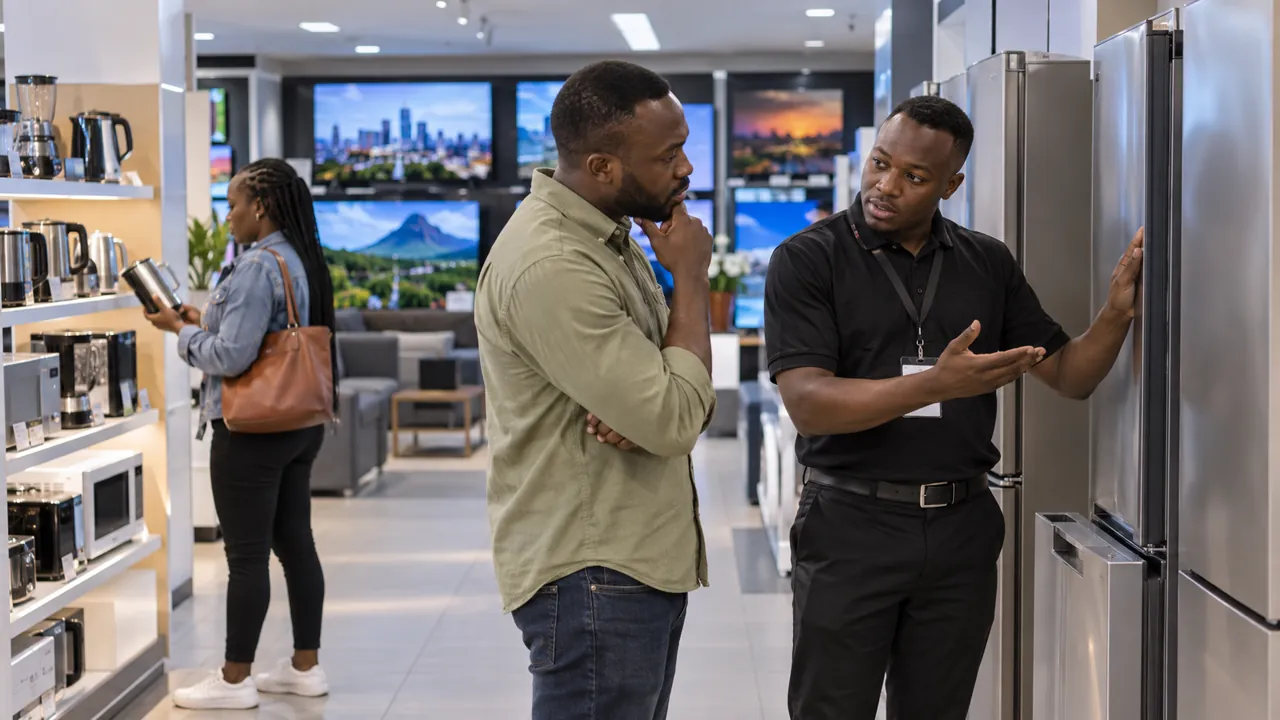
Validate submissions before comparing branches
Mystery shopping reporting begins with quality control. Confirm the location, visit window, scenario, completion time and required evidence before using a score in management reporting.
For electronics and appliance stores, evidence may include quoted prices, availability notes, public warranty information and interaction and follow-up notes. Review whether notes support the scores and follow up quickly where a submission is incomplete or contradictory.
Organise findings around the customer journey
Report the journey in the order experienced by a shopper comparing a technical product and after-sales support: arrival and staff availability, needs and budget discovery, accuracy of product comparison, demonstration and stock confirmation and warranty, delivery and installation explanation. This makes the report easier for operational teams to understand than a long list of unrelated questions.
Show network results, branch results and critical exceptions separately. Include the number of visits behind each percentage so readers understand the strength of the comparison.
- arrival and staff availability
- needs and budget discovery
- accuracy of product comparison
- demonstration and stock confirmation
- warranty, delivery and installation explanation
Explain the cause, not only the score
Typical problems in electronics and appliance stores include staff push one product without discovery, incorrect feature claims, display units not demonstrated, warranty terms unclear and delivery costs revealed late. Use shopper narratives to show how these issues affected the journey.
Look for patterns by location, day, time, enquiry type or customer profile. This helps distinguish a one-off event from a process, training or resource problem.
Prioritise actions by risk and customer impact
Retail managers can improve needs-based selling, technical accuracy, demonstration quality and after-sales explanation. A practical action table should name the finding, evidence, affected locations, priority, responsible owner and target completion date.
Avoid publishing a league table without context. Recognition can motivate teams, but the main purpose is to improve the service system and protect the customer experience.
Close the loop with a follow-up wave
Repeat the most important journey checks after corrective action. Keep the same definitions and comparable scenarios so improvement can be measured fairly.
Rudder Research and Data Analytics LTD prepares concise management reports and dashboards that turn mystery shopping evidence into accountable action.
Frequently asked questions
How many electronics and appliance stores visits are needed?
The right number depends on the decision, number of locations, customer scenarios and whether management needs a baseline or a statistically stable trend. A pilot can confirm the practical sample before a wider wave.
Can visits be completed outside Nairobi?
Yes. Rudder Research and Data Analytics LTD can coordinate mystery shopping in other Kenyan towns and counties where the locations, timing and evidence requirements are clearly defined.
What does the client receive?
Deliverables can include a quality-checked visit dataset, branch scorecards, shopper narratives, evidence where appropriate, a management summary and an action tracker.